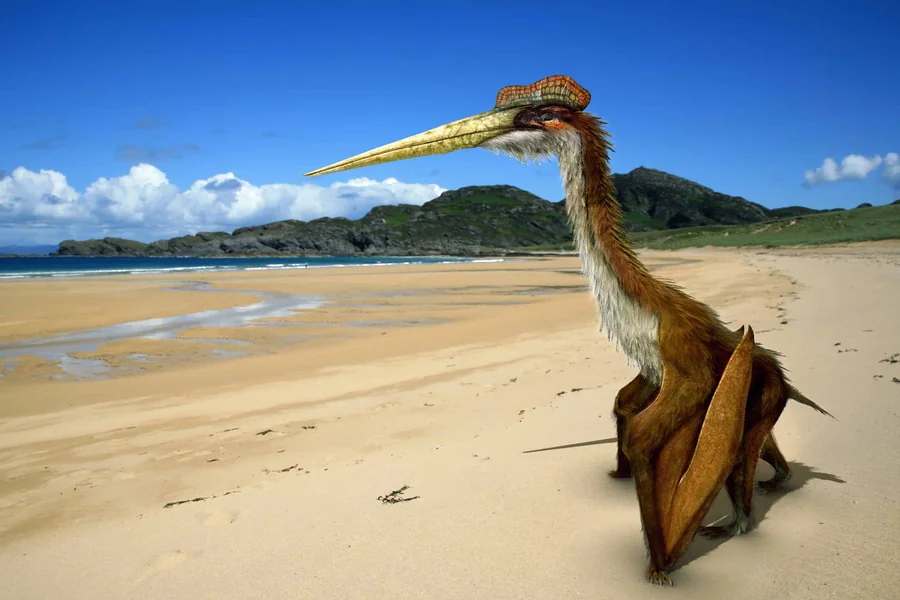
The largest flying animal that ever lived is called Quetzalcoatlus northupi. This pterosaur lived in the Late Cretaceous era and is a marvel to the paleontologists because of its massive size and peculiarities. With its long neck, great height and vast wingspan it was a real giant in the skies. In our case, scientists tend to use modern animals and compare them to Quetzalcoatlus height in order to have a picture of the great height. It was up to 5 to 6 meters tall on the ground and it was easy to imagine its size, as it was comparable to a modern giraffe.
Quetzalcoatlus was light in weight at its height despite being very large. It weighed about 200-250 kilograms and its body was streamlined to fly. The prehistoric sceneries meant that it could fly with its lightweight bones and huge wings, scavenging and hunting with ease. Knowledge of Quetzalcoatlus height enables the scientists to guess its posture, feeding patterns as well as how it might have gotten up in the air.
Quetzalcoatlus Height ## This area is where the film’s protagonist, Rama, becomes consumed by anger and fear as she struggles to reconcile with her own feelings and her life’s direction.
Quetzalcoatlus northropi has its standing height taken in all fours, with the long neck stretched to the sky. This height is between 5 and 6 meters, which is the same as the tallest contemporary terrestrial mammals. The length and pointiness of its beak contributed to the total effect of growing in size to make it a physically a threatening animal. The comparison to giraffes can easily make people understand how tall Quetzalcoatlus grew when he was mature.
The smaller species, Quetzalcoatlus lawsoni, were a lot smaller in size, having a wingspan of 4.5 and 6 meters. Although Q. lawsoni were not able to soar to such incredible heights as Q. northupi, it nevertheless retained the typical long neck and light build. Both species exhibit the amazing diversity of pterosaur morphology and the influences of evolutionary forces on their flight and feeding patterns.
Wingspan and flight capabilities.
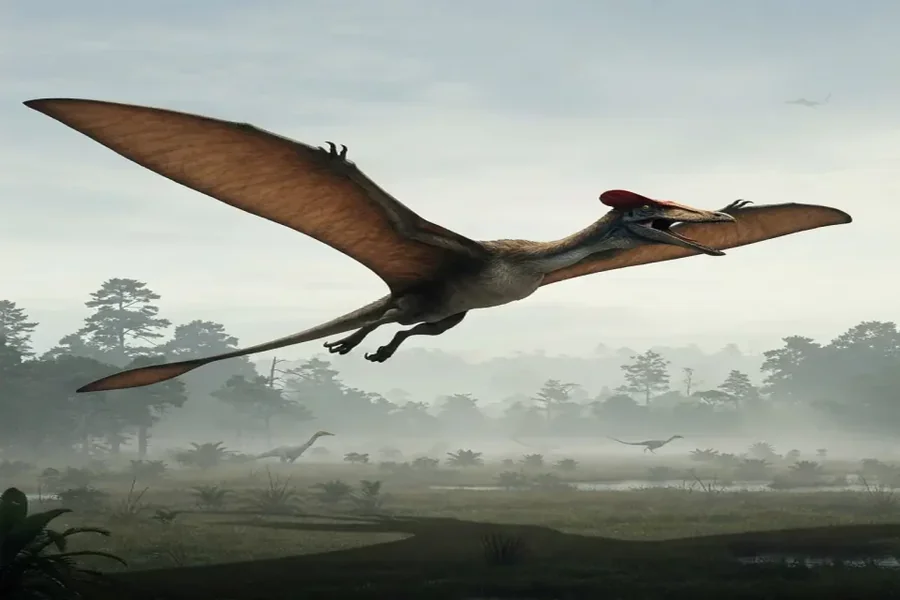
Only part of it is the height of Quetzalcoatlus. It had a wing span between 10 and 13 meters that enabled it to fly without difficulties at long distances. Scientists suppose that it had the ability to fly high as modern large birds, and it has used thermal updrafts to save on energy during the flight. It had long and narrow wings and powerful lightweight bones that enabled it to fly so well.
Quetzalcoatlus height and wingspan are important in understanding the biomechanics of this animal. Its height on the land gave it a wide range to look at prey, and its huge wings provided it with the ability to take flight when the need arose. This allowed it to dominate its ecosystem as a predator and scavenger due to its height and wingspan which allowed it to cover extensive territories and hunt efficiently.
Diet and Feeding Habits
The status of Quetzalcoatlus height must have contributed to its feeding pattern. It was tall and with a long neck, it could either attack its prey up in the air, or scavenge on the ground by catching small animals and carrion. Paleontologists indicate that it might have predated on small vertebrates or have followed like a stork or heron of today, as it could rely on its height to enable it see the food on a distance.
Its wings were also large and this enabled it to cover long distances seeking food. Quetzalcoatlus, despite its size, was agile in the air and the body was lightweight meaning that it could easily land and take off in different terrains. Its feeding patterns show excellent combination of both terrestrial and aerial hunting pattern, all relating to its fantastic height and size.
Comparison to Modern Animals.
The height of quetzalcoatlus is similar to the giraffes in the modern world because they are among the tallest terrestrial animals. This pterosaur was 5-6 meters tall and it would dominate the humans and most of the other animals on the land during its era. This added to its size, making it an animal of unsurpassed size in the skies of the prehistoric.
Modern birds, such as albatross and condor, have a high wingspan in relation to the body, but Quetzalcoatlus far surpassed them in size of wingspan and height. Its slim structure and bone modifications played a critical role in enabling it to fly even though it was very big which remains a mystery to paleontologists and other scientists.
Skeletal Anatomy and Structure.
Quetzalcoatlus has a height and flight capabilities which are supported by the anatomy of the animal. It was lightweight due to hollow bones that did not reduce its strength and had long limbs making it stand tall and move easily on land. The long neck also helped to feed as well as scan the environment, which made it more efficient at identifying prey or predators.
The height of Quetzalcoatlus combined with its skeletal structure has a tremendous evolutionary adaptation. It was constructed to move over land and dominate the air, which was the reason why it was one of the most adaptable pterosaurs. Its structure offers information on how it was able to both support huge size and maintain the principles of flight, a task that has only been successfully accomplished by relatively few living creatures in the present day.
Scientific Discovers and Fossil Records.
Quetzalcoatlus northropi have been found in fossil forms and this has enabled researchers to determine its height and wingspan with precision. Finds in North America have come up with incomplete skeletons and structure of bones that give researchers insights into how it was in posture, size, and movement. These fossils have played a crucial role in the reconstruction of Quetzalcoatlus so as to determine how it gained its impressive height.
The estimates of Quetzalcoatlus height are made by comparison with other species of pterosaur and by scaling on the basis of the remains of the fossils. These facts point to its massive size but also to its importance in the Late Cretaceous as a major predator and scavenger. With every new fossil discovery, we learn something about its proportions, mobility and ecological roles.
Legacy and Fascination
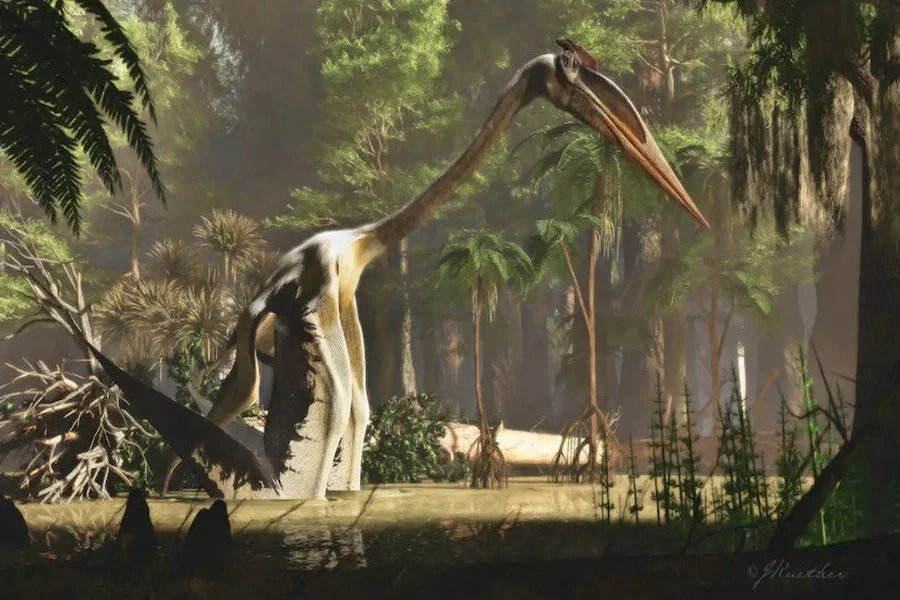
Its massive size and huge wingspan give it a representation of gigantism of the past and the remarkable adaptations of flying reptiles. Through the study of Quetzalcoatlus, scientists are able to understand evolution, biomechanics and diversity of life that was exhibited millions of years ago.
The obsession with Quetzalcoatlus height also spreads to the popular culture, where it is represented in documentaries, films, and museums. Its scale evokes awe and gives one a physical sense of what the prehistoric world must have felt like, as people imagine a creature that is both ground-based and airborne and is towering above the rest like befitting of modern animals.
FAQs
What is Quetzalcoatlus height?
Quetzalcoatlus height was approximately 5 to 6 meters (16 to 20 feet) tall when standing on all fours.
How does its height compare to modern animals?
Its height is comparable to a modern giraffe.
What was the wingspan of Quetzalcoatlus?
It had a massive wingspan of 10 to 13 meters (33 to 42 feet).
Did all species have the same height?
No, the smaller species, Q. lawsoni, had a wingspan of 4.5 to 6 meters and was shorter.
How much did Quetzalcoatlus weigh?
It weighed around 200–250 kg despite its enormous size.
Was its height important for hunting?
Yes, standing tall allowed it to spot prey and scavenge effectively.
Could Quetzalcoatlus fly with such height?
Yes, lightweight bones and a large wingspan enabled flight.
Where were its fossils found?
Fossils of Quetzalcoatlus have been found in North America.
What period did it live in?
It lived during the Late Cretaceous period.
Why is Quetzalcoatlus height so fascinating?
Its enormous size and adaptation for flight make it one of the most impressive prehistoric creatures.